Binder
The Binder is the main way to navigate a project. It displays the structure of your project and allows you to manage sheets and bookmarks.
You can toggle the Binder by clicking the  icon in the top left corner of the project screen.
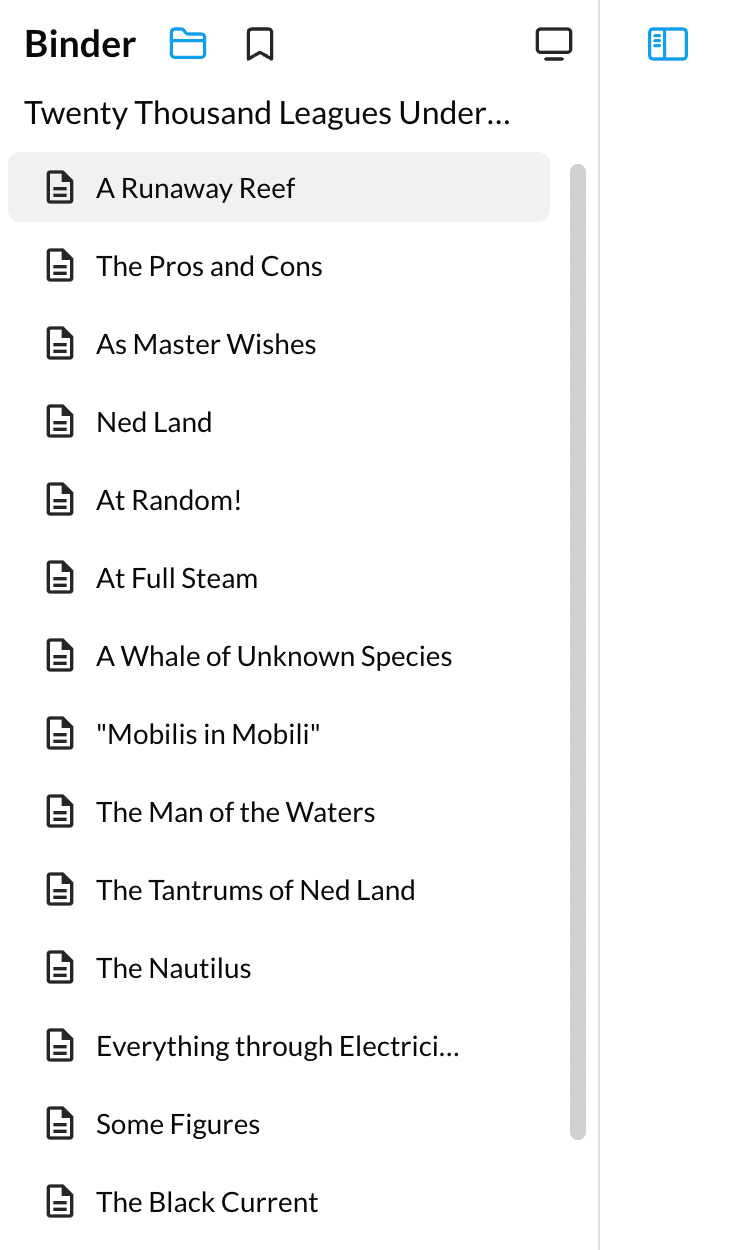
What is a Sheet?
In ShyEditor, a Sheet is like the building block of a project. The exact definition of a Sheet is up to you, and it will probably depend on the type of project you're working on. For example, a Sheet might represent a chapter in a book, an article in a blog, or a document in a manual. Sheets don't have a size limit, so you can make them as long or as short as you want. This also means that the granularity of your project is up to you.
Some project types only have one Sheet by default. For example, in Academic Writing projects, the single Sheet is intended
to represent the entire paper. However, you can enable multiple sheets for any project type in the project settings.
If your project has multiple sheets enabled, you can create new sheets by clicking the  icon in the top left corner of the project screen.
Folders
Folders are organizational containers for your sheets. They can hold sheets as well as other folders, so you can build a nested hierarchy of any depth — parts containing chapters, sections containing articles, and so on.
From a folder's context menu you can add a sheet inside the folder, add a subfolder, rename the folder, or delete it. Deleting a folder also deletes everything inside it, so be careful.
Sheets view
You can open the Sheets view by clicking the  icon. This view displays all the sheets and folders in your project as a tree.
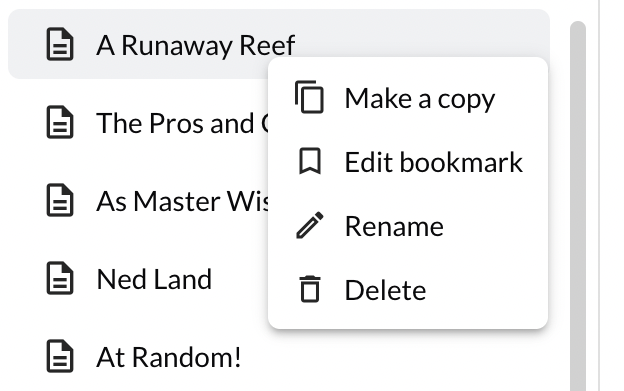
Click on a sheet to open it. Hold and drag a sheet or folder to reorder it, or to nest it inside another folder. Right-click a sheet to open the sheet's context menu, which lets you rename the sheet, make a copy of it, bookmark it, or delete it. The only sheet you can't delete is the last remaining sheet in the project.
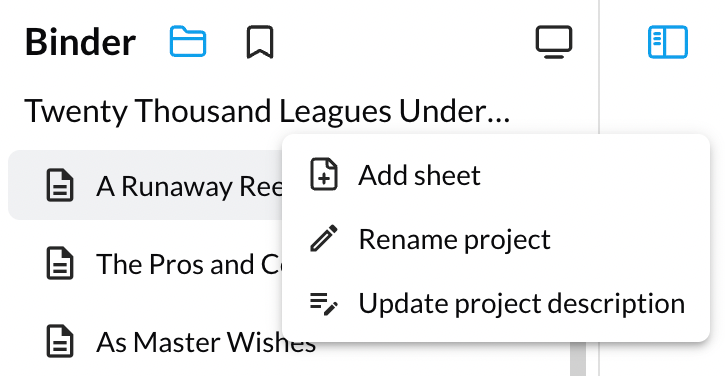
The top of the Sheets view displays the current project name. You can right-click the project name to open the project context menu, which lets you add a sheet or folder at the root level, rename the project, or update the project description.
If a sheet has a label, it will also be displayed in the Sheets view. Labels can be shown as a colored border, a background highlight, or a colored dot — or hidden entirely. This is configured via the "Label preview mode" option in the project settings.
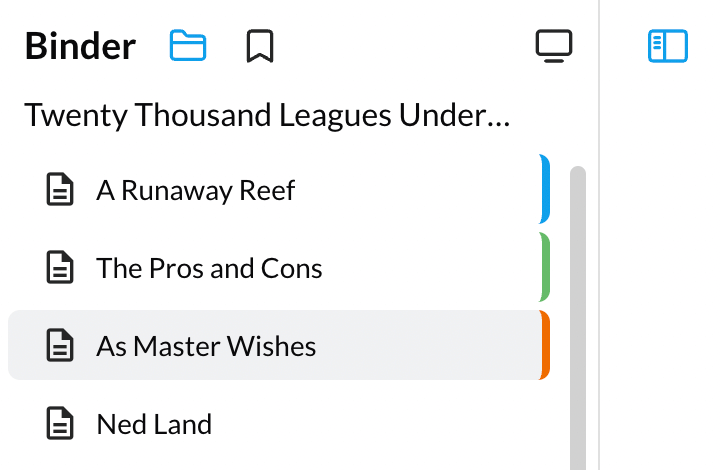

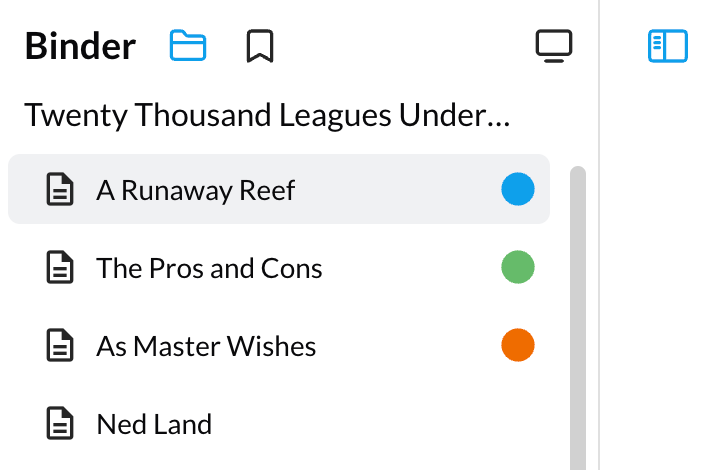
You can assign and configure labels in the Overview tool.
Bookmarks view
You can open the Bookmarks view by clicking the  icon. This view displays all the bookmarks in your project.
Clicking on a bookmark will open the corresponding sheet in the editor. You can also right-click a bookmark to open the bookmark's context menu, which allows you to edit or delete the bookmark.
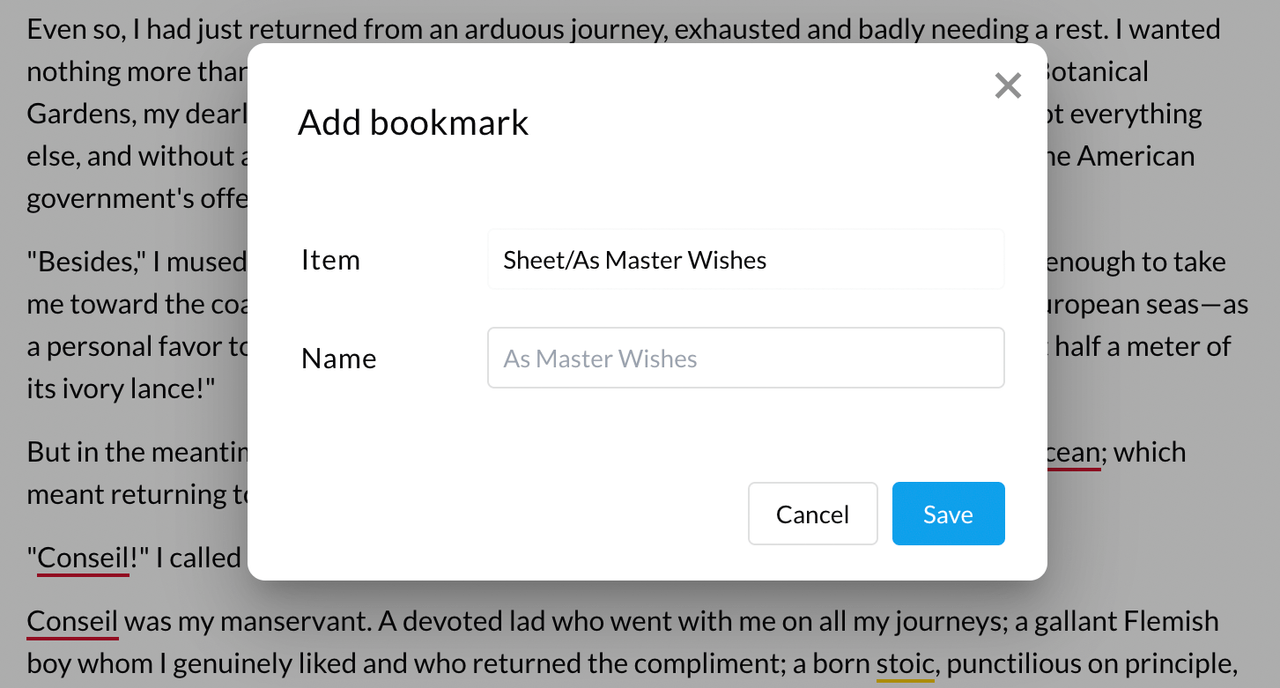
To add a new bookmark, right-click a sheet and select "Bookmark". You can add a custom name for the bookmark, but by default it will be the name of the sheet.
Outline view
The Outline view displays all the headings (H1–H6) from the sheet that is currently open in the editor, indented by heading level. Click any heading to scroll straight to it in the editor — handy for navigating long sheets.
Corkboard view
You can open the Corkboard view by clicking the  icon. This is a special view that gives you a quick overview of your project.
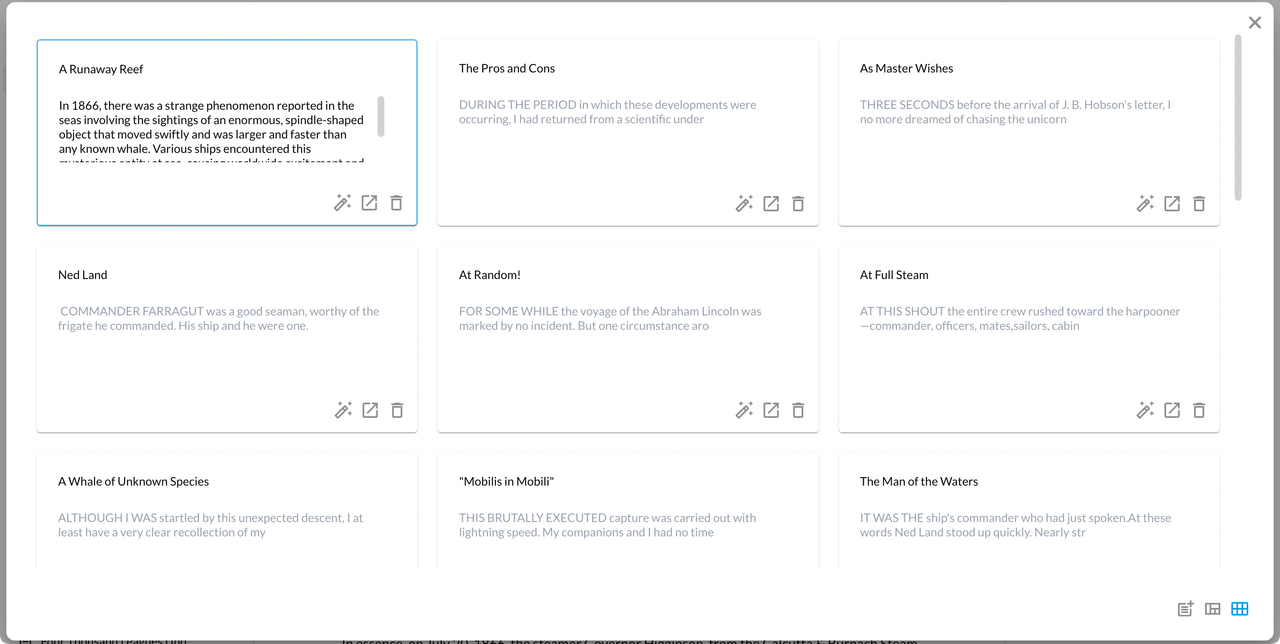
When you open the Corkboard view, you will see all the sheets in your project as cards. There are two layout modes: Grid, with structured rows and columns, and Freeform, where you can drag the cards anywhere you like.
Each sheet is represented by a card, which contains the sheet's name, the sheet summary, and sheet actions. If a sheet doesn't have a summary, the card will display a preview with the first few lines of the sheet. You can edit titles and summaries directly on the cards. The sheet actions allow you to generate a summary using the AI Assistant (1 credit), open the sheet in the editor, or delete the sheet. You can also create new sheets right from the corkboard, and cards show the sheet's label color if one is assigned.